Written by: Ptolemy
‘Book of Hours’
by Weather factory
Are you up for playing a cosy game? I was. But there are cosy games and there are games which appear cosy while dangling numinous mysteries and complex crafting systems and weird people in your face. No points for guessing which one ‘Book of Hours’ is.
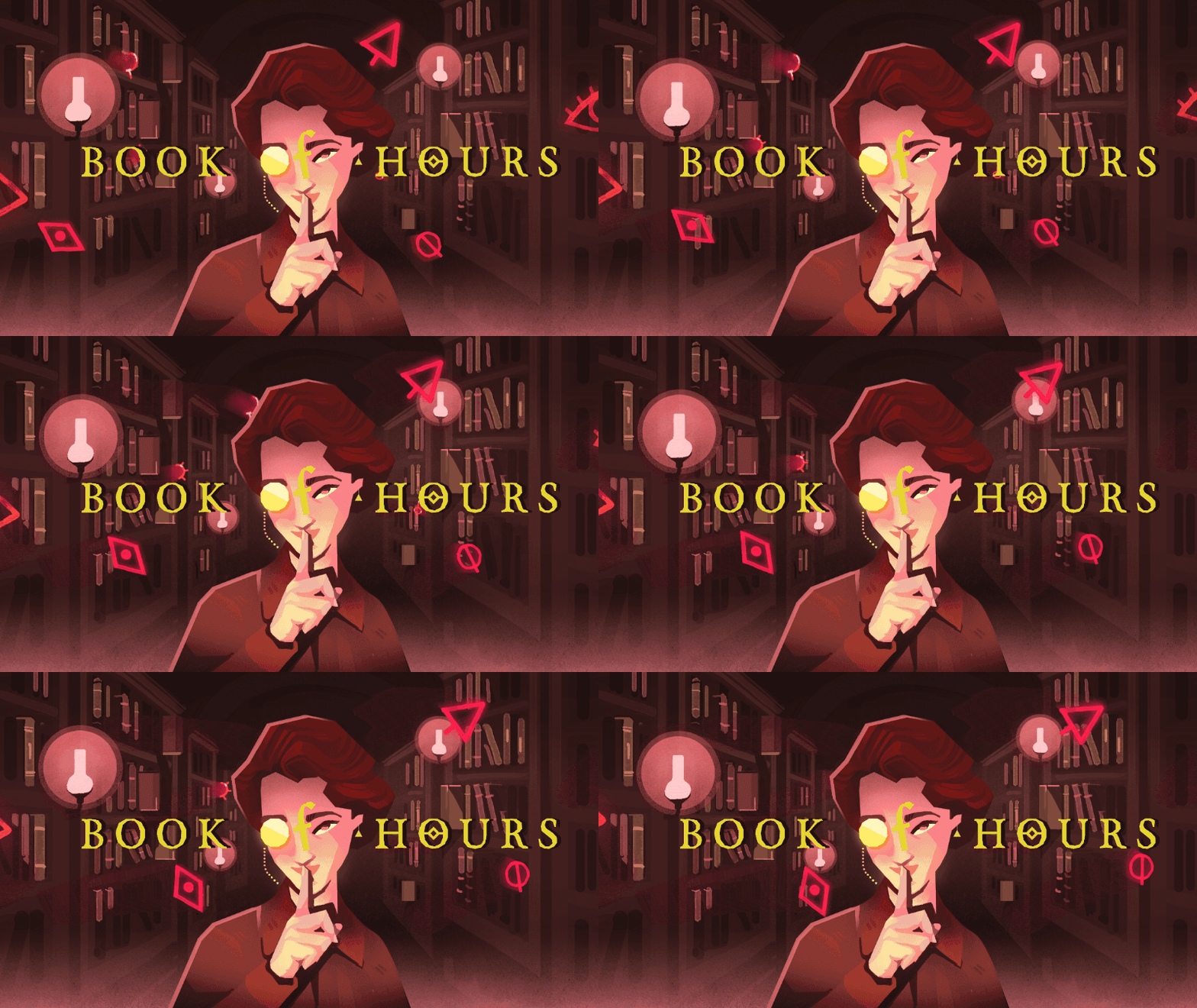
(Gif. from… I’ll be honest, I have no idea. I’ve had this saved on my phone because I was excited to show friends and that was years ago now. I’ll say it’s from the Weather Factory website, but I’m trying to track down where I got this gif. specifically.)
It’s no coincidence I arranged ‘The Weird and the Eerie’ at the front of this list. I’m not reciting Fisher for every section, but it’s worth noting that there are people who do Weird Fiction well and everyone else who defaults to plaintively conventional horror tropes. Having mentioned the growing popularity of Liminal Space Horror in the previous section, it’s no surprise that not everyone ‘gets it’ the same way.
And it’s fine. Good, even. It’s a burgeoning mode of horror and storytelling, and genre-founders are hardly ever amazing at the thing they pioneer.
But I think the label and mechanics of ‘horror’ people slap onto these weird games and narratives strips them of their most numinous qualities and flatten those liminal worlds into nothing but outer zones of danger. As with many Lovecraftian horror games, they try to inject terror into places where fascination and dread alone are meant to linger. There is no curiosity or fascination in running away from a monster, but fascination is central to the weird and the numinous.
Book of Hours is a game where you are the Librarian of an occult library in a far corner of the world. You oversee the “Hush House”, unlock its many rooms, fill them with occult texts you find, keep pets, cook delicious foods, and perform rituals to (re)write a new history.
It’s a mythological ecosystem teeming with mysteries. You read the books and slowly expand your knowledge of a pantheon of weird gods, learn of terrible and sacred beings, and you acquaint yourself with some people that probably aren’t actually “people”. The seasons change, and some seasons are weirder than others. The beautifully written texts in every item description feel like the devs are winking at you. The Hush House itself is built on centuries of occult history; the more you dig into it, the weirder (and sometimes, eerier) the world becomes.
But in the end, you are the librarian of this weird old ruin, and this is your body of work. While it’s impossible to know all the secrets (only guess at them), there is a feeling that there is always more for you to discover.
Time in this game mystifies, but it also clarifies.
There is no way I can describe the lore of Book of Hours. Weather Factory follows in the Weird Fiction tradition of having a shared universe as a method of expanding the depth of its mythology. Cultist Simulator and their upcoming title Travelling At Night share a world, a mythology, and therefore a theology (or theologies).
But unlike how a lot of people understand mythology —as abstract origin stories necessarily taking place in a nebulous magical past, incongruous with historical records and the realities of the present— there is a feeling that this unbelievable history and mythology occupies spaces within the present, observed within gaps made obvious through the accumulation of knowledge and skill.
There is history, but “history is less certain than we are taught” with its myraid interpretations and implications.
It catches us off guard the fact that the Unknown prowls around the outside of our perceptions but is nonetheless always present, able to show itself at any moment in the weirdest ways.
What Weather Factory writer and industry veteran Alexis Kennedy does best is that he’s incredible at presenting holes and gaps in lore as much as he is at generating lore. There is no way to fully know the weird natures of the gods (known as ‘Hours’ in the game) by reading any one book or scroll, there is no way to actually find a definitive answer to any question about how the world actually functions. There are only guesses at what’s behind the door, there are only peeps through the gaps of reality.
And it helps that artist Lottie Bevan’s amazing visual style blends this approach of showing what’s known (and cosy) with what’s possible-to-know. Cultist Simulator was great but it was characteristically forbidding and protective of the visual secrets it harboured. At first glance, it’s a board with cards. Its secrets are for those in the Know. Normies need not apply.
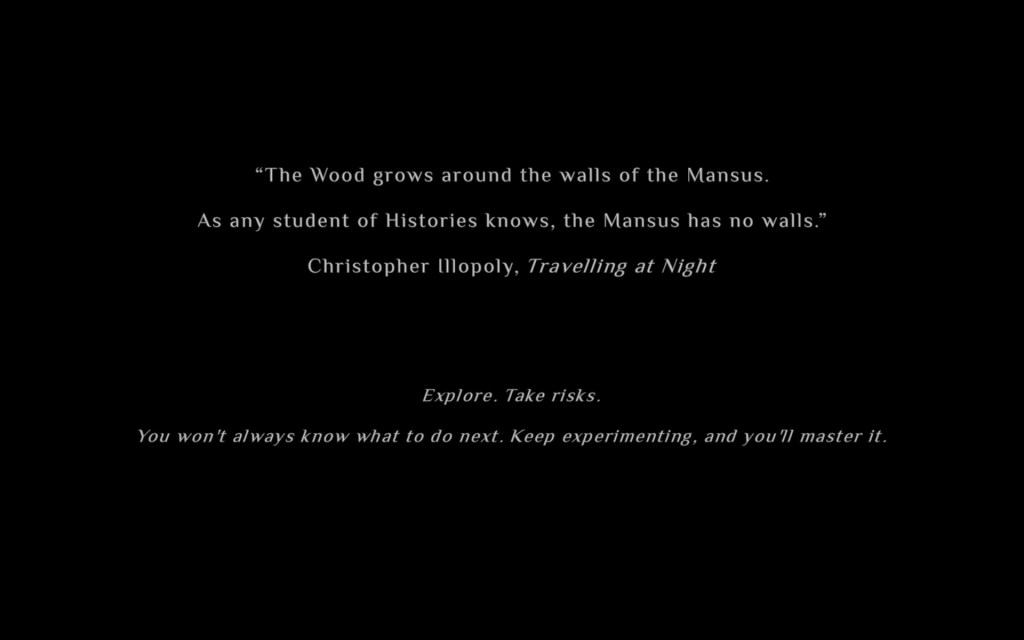
(Screenshot of the text upon launching my copy of Cultist Simulator. I thought about adding more, but I’m refraining from adding pics of gameplay willy-nilly.)
Book of Hours is similarly protective, but more nurturing of the curious ones. The game lets people indulge the romantic fantasy of occupying a large historical manor surrounded by books and curios, while it keeps you on your toes as to what else can be discovered. The game reminds you of its more lenient nature as much.
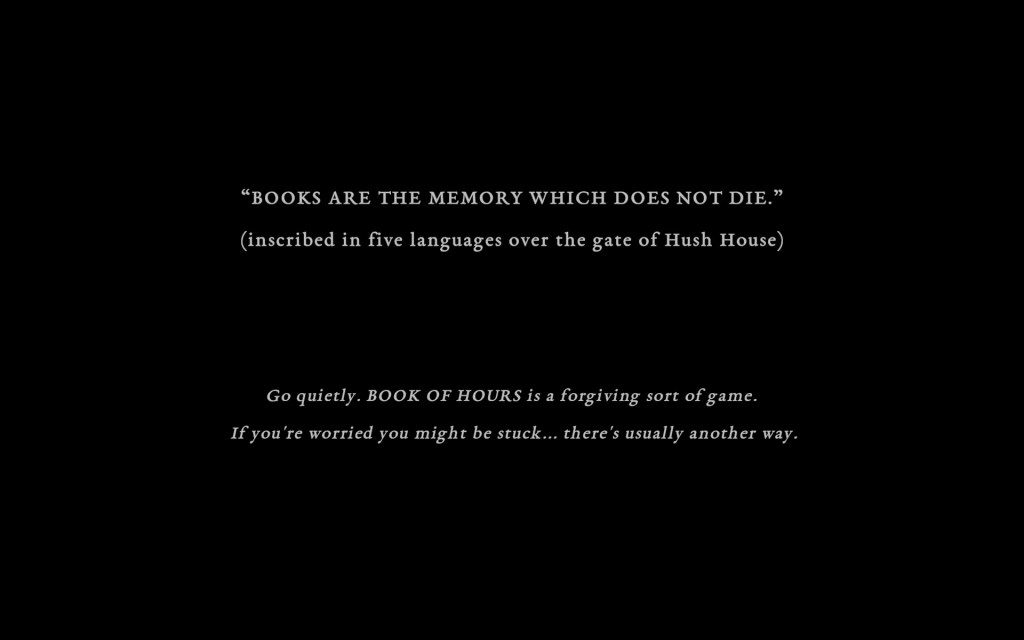
(Screenshot of text upon launching own copy of Book of Hours, or BOOK OF HOURS if we follow its exact wording. But if I yell, I might be hushed.)
The greater point is that the game is good at creating the feeling —rather than the fact— of occupying a world of mystery, a world heavy with The Weird. Of course, you could always look up these secrets and find online explanations. But feeling like you don’t know anything and want to find out more is part of discovering the Weird.
It’s not great at being a ‘cosy’ game, as some disappointed ‘cosy-gamers’ have pointed out. But Book Of Hours is bad at being cosy because it is busy being interesting and charming, encouraging fascination and wonder.
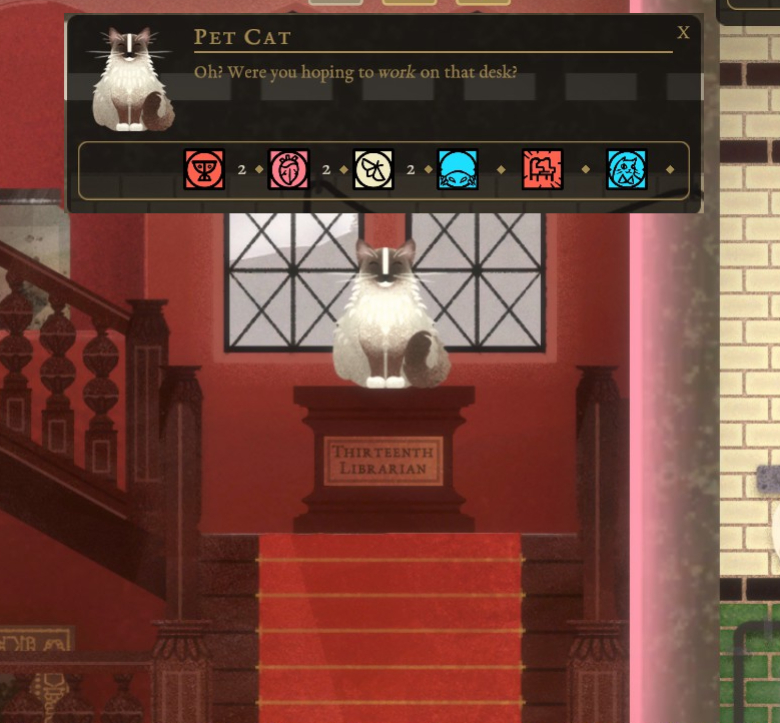
“Mója kotka, Marzena! <3″
I wish the devs the very best on releasing Travelling At Night soon, since I’m definitely buying it on release.
-Ptolemy
 Ptolemy Is Writing Again...
Leave a comment