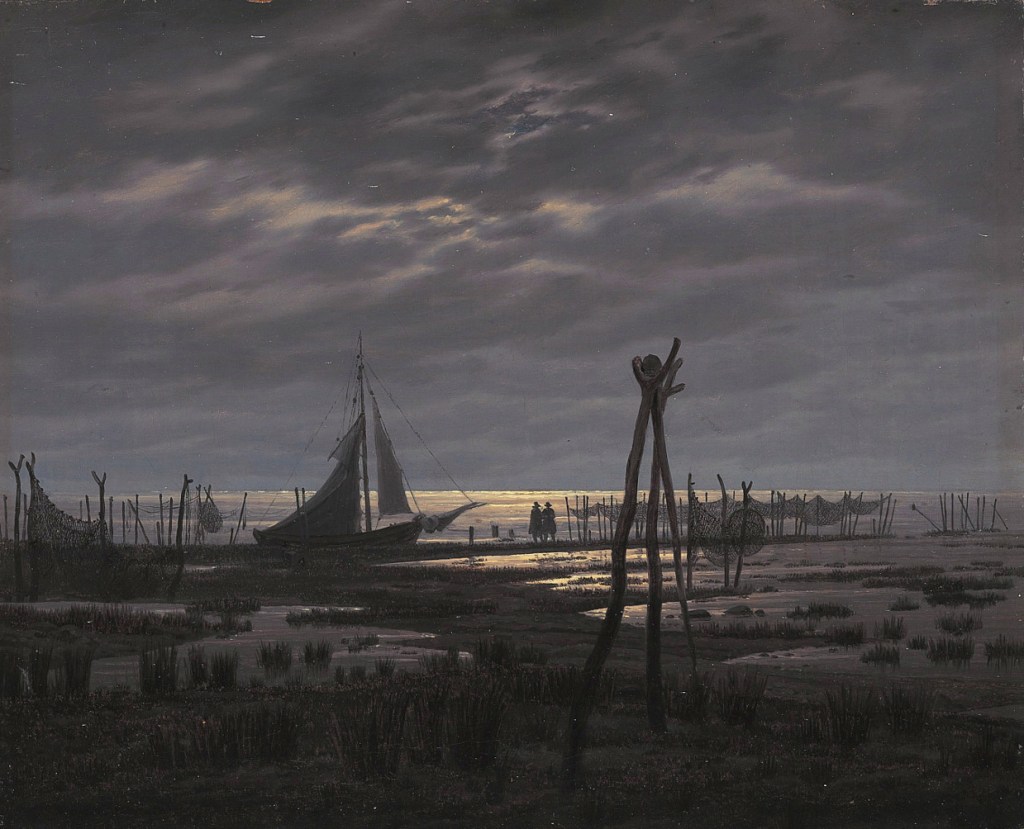
Written by: Ptolemy
Introduction
Were I still with the faith, I’d have remembered sooner that Sunday last was Palm Sunday. And were I a different person, I’d have remembered a lot more than what bits and pieces I do recall. I’ve always opined that the reality composing my past feels thin. Like it happened to someone else. There are moments, like parts of a poorly half-edited draft, that don’t fit with the rest.
Almost a year ago (it might have been around the Christian Holy Weekend), I wrote a short non-fiction that could fit within a personal vision of what ‘(East) Malaysian Gothic’ prose might look like in a place where friends could see it. Someplace you won’t find searching on the internet.
I’ve written longer (and many incomplete) works since. But mentally I return to what I wrote as being an early primer to what I’ve tried to build up so far.
Plans have been made to return to my hometown. Plans that echo with the past and coincide with the original date I wrote this. At the risk of plagiarising myself, I decided to quietly add, lightly edit, and hopefully re-post it here where it can be remembered better.
Between Home and Hometown
What you're given, what you live in
Darling, it finds a way to live in you
And your heart, love, has such darkness
I feel it in the corners of the room.

'De Selby, Part 2' by Hozier1.
We returned to our haunted little Hometown over the weekend for only a day, though it felt longer than that. My sister was there last Friday. On Sunday, I drove my mother and myself down to our old hometown to retrieve her so that life may return to normal.
It’s a trip I made many times over the course of my life: two or three hours rattling in a car or an old bus across the plaqued-up, thinned-out arteries of probably Malaysia’s strongest leg. A leg that lost most feeling after a stroke left it crippled. Two to three hours spent suspended in a timeless zoetrope of lush and painted greens under an overcast lamp; the cylinder of images spinning is the sound of wheels humming harshly across the seats, the windows, the cold air. The feeling seeps into your fingers. It’s a buzzing, like a wordless lullaby.
Credit where it is due, it’s a better road than it was years ago. Cleaner. Less-acned with potholes. Everything more pronounced. Like a new office recruit that was ironed-out to fit the business suit he was given.
The halfway gap between Home and Hometown used to be a bare-bone cluster of rickety houses and time-browned shops, hidden in the branches of gloomy darkwoods and the long shadows of uniform palm trees. The No Man’s Land of silent post-colonial, late-industrial warfare. Used to be, when you drove past here, you were halfway into the Woods.
Now, more roads. More steel. More cars.
The tall concrete bypass works like a catheter, built on a shell of Nehemiah walls. It takes out the need to go through that old memory of a town altogether. Sarawakians asked the Machine God of Capitalism for a way to reach Sibu, Mukah, Bintulu, and beyond, faster and more smoothly2. And as a ritual sacrifice to it, that old town was swallowed up into antiquity and will fade into the wood. Nothing will remain. Now, the road blesses us with a triple passage. An easier journey for lorries and trucks bringing the fruits of palm oils, cattle, and delivery packages.
On this road, we overtook many such cars and trucks, and many overtook us.
People progress onto different philosophies when it comes to the noise of the road. Some suffer the hum of tar and gravel, and try to fill it with conversation. Others prefer the sound of music or podcasts to drown it out. And some hear the same hum and are content. The longer the trip, the likelier some walls and reservations about noise collapse. There is a similar progression in Aging. The longer life stretches, the greater you feel the need to fill it with new ideas and noises. And like infants who die young, short trips often feel and end with the same certainty: without room for more.
My mother and I have different ideas for noise-making on a road-trip. Being who I am, the road is home to music and podcast conversation. Some things I don’t listen to on shorter drives. My quiet thoughts lay with the car’s low hum as ideas and melodies float.
Being who she is, the road is the frame of lecture and loud contemplation.
The radio buzzes with the voices of people we’ve never met. Tom Scott’s ‘Lateral’ — This week’s guests, the cast of Jet lag. They’ve come onto the show before; I’m not a fan of them. But a weekly episode is a weekly episode, and on the road it’s just there to fill the air with noise. Question, answer, laugh, repeat. Question, answer, laugh.
The question is about the Chinese Zodiac. The Answer: Women born in the year 2026 are prophecised to be husband-killers. The laughter from the revelation doesn’t come through. My mother does not laugh, she’s in a fury of thought. A din of opinions overpower the next question.
“It’s interesting what people can tell with the Zodiac. You, a Metal Snake. Your sister, the Wood Monkey,” she declared. Outside, a car passes us and we pass a car. “I’ve always been interested in what people are able to say about their date of birth. Like your birthday…”
I know my birthday, as much as I know we’ve come onto Iban Longhouse territory. Their names are on the signs, as clear as towns and cities. Shapes stand between the trees and the hills. Cars slow in silent reverence and turn off into obscure lanes that are barely lanes. Strange gates and grass paths you would miss if you never saw a car turn in towards them. It makes some cars look like they’ve vanished into the aether.
“…No, not the one in March,” My mother continued. “The one according to the Chinese Calendar. You were born on the 25th day of the 2nd month…”
Some Iban Longhouses grow sick. Sick of tragic crashes onto their property. Sick of people going, and never coming back to them. At the turns, people bore holes into the ground, pierce them with halved broomsticks and branches, and crown the tops with stripped neon bottles of Mountain Dew. This act keeps tragedy away. At the entrances to some of the longhouses, they strip a dead tree sapling to its wooden skeleton and nail bottles to its fingers. In the wind, the skeleton waves at the road for those that have left to return. This act brings people home.
“…I remember when I had my fortune read, they said I would face a great hardship in my forties. That if I could overcome it, all would be well afterwards.” Out the corner of my eye, my mother prodded the left arm she lost control over after a stroke, years ago now. But not in her forties. “And they said that one of my children will grow to great heights to bring prosperity. The other will achieve little.” She stared into the horizon of trees, the gaps in the forests and the passing palm oil plantations. Overcast. Longhouses watching on the hills.
She nodded, “Your sister is a hard worker, I can see it in her. You might think she does so little around the house, but I think if she ran with the right crowd more she would be willing to put the family first.”
I didn’t offer an opinion.
The drive progressed, though difficult it was to tell how far. From second-hand soothsaying to music to a lament on President Trump’s tariffs —”You know they’ve started buying up gold. People have been taking out deposits.” The hills, the lanes, the miraculous bypass and the coastal road. Tar and concrete are poured over conquered land, while the wood of the forests keep the rest of it. Neither side discriminates between a living thing or a dead one, only between those on the side of road bends, or the side of the rattling branches. Whatever rituals you do in your car, do them to keep their hunger away.
The road never ends. You only stop your car when you have enough, or when the road’s had enough of you.
On a motorcycle or with a window opened, Home tastes like aluminium; Hometown tastes like seasalt. When our legs ached for movement, we were there. The old house on stilts loomed over us. Someone trimmed the grass along the edges of the nearby cemetery, headstones growing lopsided and sunked. The stilted front verandah is cobwebbed and aching. Underneath, the fish-net hammock my late uncle used to lounge in on days as hot as these was bunched up and dangling. The shoe rack is a heap of broken boards. Looks like nobody uses the front door these days.
“I’m not going in,” cried my mother. “Go get your sister, we’ll go find someplace for lunch when you’re done. And give this to your father, say it’s from you.” She pressed money in a sampul raya into my hands. I took it and did as asked.
My father looked… okay. It was difficult to tell how he really was in his condition. But he looked better than when I saw him last. He was happy to hug me more than twice, and seeing that I lost some weight, he exclaimed he could lift me over his shoulders like a little lamb. “No, the floor won’t break. Come on! Don’t be like that!”
We talked, but never for as long as we needed to. He stopped to whisper at nothing and blow raspberries at the air once or twice. My questions needed repeating, and his answers needed patience. Before long, we needed going. The air of the house grew too oppressive. Faces of my late uncles hung over us, flanking the images of Mother Mary, Christ, and the grandparents whose voices I don’t remember. Thin dust motes float like ghosts in the old living room. Altar’s empty. The windows are closed and tinted, so God doesn’t peer in as often anymore.
I pressed a finger across the edges of a shelf, picking up browns and greys — Something is eating up my old books again. As I turn I almost knock over something that wasn’t there before. It’s like this in most of the house for him. In the place of cousins, uncles, aunts, or friends, my father got himself surrounded by books he didn’t read, chairs he didn’t sit in, and altars he doesn’t pray at. Too many things stay here, and I couldn’t anymore. The thought of leaving stung like a nail struck into the wood of a coffin. No one should stay here, but he wanted to, despite our best efforts. We’d had this talk before, and the response was always the same: raspberries blown and conversations that circled back into themselves.
I hugged my dad twice again, said that I’d be back soon. “Love you too. I’ll see you when I see you!” And he dove back into his bright kitchen where his cigarette-smoking could re-commence, leaving the masses of things in the rest of the house untouched. Just like that, I walked out the way I came and closed the door to the ghosts and the relics and the ancestral faces that watched me go.
Until the next time.
When I returned to the car, my sister was in the backseat.
It was past noon-time. Everyone was hungry now. “Alright then, where to eat?”
Afternoon sun melting the town square; a two-block boulevard of broken fountains and tiles green with mould. The central clock tower on the roundabout and the mosque close looked snobbish with a half-coat of gaudy green paint not done all the way around the buildings. The local hotel parking lot was dry. The old township had barely a soul. Ours was the only car driving. Flyers on the ground fluttered without the wind. That’s all there is in the afternoon.
“There,” nodded my sister towards a restaurant on the corner. “Food there is good.” It was a place across the short street from an empty mechanic’s garage. Tyres wrapped like fingers in band-aids out on the front by a broken car nobody was working on. My mother nodded with her, said it looked fine enough.
I didn’t offer an opinion.
“What did your father say? Anything?” My mother traced her gaze across the laminated paper menu, though she made clear she already had a dish in mind. My sister and I exchanged a half-second look to confirm neither of us could tell her anything besides what she didn’t want to hear: that our father loved us.
She knew that, but like all facts about death and about exes, it was the kind of thing you place yourself in denial for. My sister spoke briefly, “If I ever find a sane way to explain what he whispers or says to himself, I’d tell you what he told us.” Afterwards, she hardly spoke again. The phone in her hands made better conversation.
A thin waitress came with our food. Umai with a bowl of Sago3. Our mother picked her fork from a cup and then at the light-pink flesh. Fish tasted like nothing —there is no taste in raw flesh, only texture. Beads of Sago, chasing droplets of lime juice and shavings of onion, are bland. They feel like low-grit sandpaper, like the end of a sentence. Some say that this is the point.
My mother made a game for herself, conversing in the Melanau dialect as we each took turns picking at the bowls. She was her only player.
My sister’s face sunk into the vortex of her screen. Her thumb stretches with her eyes and her ears, following the habit of trading the commodities of light and thought between the event horizons of two black holes. Light and sound pass from the starlight of her phone screen into the oil palms and the forests of her mind. The fruits gathered from those cerebral woods are traded for an equally intangible stimulus, far more valued than the uncertain barter of this lunchtime conversation. One of the rituals of the Machine God. It was unprofitable, and therefore, quietly unconscionable to interrupt her fully.
I turned to our mother and asked where we were going next in Melanau. She didn’t answer, merely spoke.
I let a moment pass. The amount of time it takes to brave another fork-full of soured flesh and onion and sago. I notice my sister doesn’t eat her umai with sago. The bowl passes to our side of the table again. She passes it on, and the little grey beads stare at me.
It takes a certain type of person to enjoy sago as it was. People, often old, take these starch-grained beads alone for lunch and for dinner. To them, it tastes like childhood. It tastes like certainty, like bittersweet finality. Other people, often young, think it tastes like sand and starch and nothingness. I come to the conclusion that it takes hunger to eat sago plain, but something else to enjoy it. There are plain tastes, yet there are foods plainer and more filling than these beads. I could not think of any food as terminating or as final. It was hunger for less hunger.
I repeated my question in our usual tongue. Our mother shot me a look that was sour. Sour for ending her game, but more so when she couldn’t think of the word she wanted.
“舅公‘s house.”
A wall of grass sways, parallel to the roads and to the decomposing organs of the old town that used to pulse and squirm with activity. Beyond it, the grave of an old ghost is being desecrated on modern orders. The ancient house our great-grandmother raised and died in was being pulverised into wood scrap. There were ancient untamed woods behind that old house. They had cut some down to build its first stilts.
In a dream I used to have, I could fish little black creatures out of a pond that reflected the old house’s gables like an elder’s knowing gaze. The hidden orchestras of toads and grasshoppers flanked the dark rock path overgrown with the aroma of rain and algae in the setting sun. The soil had grown lumps where I used to walk.
While my great-grandmother was still alive, a wide-eyed brown owl perched itself on the railing of the stairs, welcoming home the matriarch’s family. When our great-grandmother died and tears were shed on the road from the town mosque to the simple flowered grave, they said a small wild turkey appeared on the grounds. Twice it came circling the house, unafraid of people, and it never appeared again.
The last traces of that half-wooden shadow lie in the grooving path the tires had cut into the grass and the pebbles. The buzzing whispers of the ancient woods were silenced to make space. They choked the old pond with sand. Now the embyro of a large steel-grey warehouse gestates on the horizon.
My grand-uncle and his family no longer live in the same spot as their old home. But they are always in view of it, and never too far from where they grew up.
My grand-uncle is a mystery to me. Brother to my own grandmother; my grand-uncle still wishes her Happy Birthday in the family groupchat, even though my grandmother died in 2003. He came to greet us at the door of his home.
“You know they are buying up gold and silver now? Your uncle has been asking us about taking out some of our deposits.” He tells us, unprompted. My grand-aunt smiles and stares at my sister. The ceiling fan above creaks out more noise than us.
At one point, my grand-uncle leaned over to ask about our father and our mother leaves the room to find a toilet. “Not doing so well, I see,” he nods like a philosopher. “It’s a poor matter, his lack of will. Depression takes willpower to overcome, you know. If he had that, he’d be better these days.”
My grand-uncle said nothing further aloud. He lifted his head and nodded to the crucifix on the wall: “We’ll pray for him, don’t worry.”
My grand-aunt never stops smiling and staring at my sister.
And I didn’t offer an opinion.
Come the end of the conversation, the pair let out tired and forgetful exhales of air into the world. Their pale house, their clean single-storey possessing a slight and forgettable roof with no history in the world has found a way to live in them. Now, they seemed to have known no other home at all. Their grandchildren, who shy away from us in their bedrooms, were caught up in their endless cerebral exchanges with the Infinite. They grow up now in a house where the ancient woods no longer reached its fingers over them. And for that, at least, these tired exhales were tinged with relief.
It was going to be late soon. “We should get going,” my mother decided. I could see the bright air threatening to fall on us hungrily. The black birds have evacuated their perches. The sermons of the insects have eerily halted under the sun’s heat. I pressed the car keys into my sister’s palm; I had driven enough.
I was tired of staring out across the endless, receding horizon where the road and sky align. They form the portents of events repeated countless times before, like a film on repeat. I grew up around fishermen, around augurs of the salt-air. Around those who could tell the coming of darkness when it outpaces the dusk.
There is a sentimental misrecognition that, from the darkness of tempests, the shining sun is its natural consequent. ‘The Sun will come out tomorrow, after the rain’s end.’ It’s the reverse that is true. The blackness of storms are the foregone conclusions of bright days. Heat and illumination become arrested in the accretions of darkness in the air, so much that they become caught up in each other’s forms that there is no end nor beginning. The result is not a night in the absence of the sun and the presence of the moon. It’s not an aging passage of the hours into a new day. It was a night of pure liminal uncertainty, one between sunlight and moonlight and is neither of them at the same time. The Night of the World. A night not even God at the beginning of Genesis could bear. Its only escape is through Dreams and with Patience.
We might be late to get home. It will be dark before it turns night. I insisted my sister drove us home. I told them I was tired.
The backseat’s only an acquaintance, a sometimes-friend. It didn’t spare me any comfort for rest as the car began to rattle itself against the tar of the road back the direction we came. Back across the silent life-and-deathworlds spawned in the momentum of history and eternity, of willful consciousness and the epileptic twitches of dumb instinct.
The trees along the seaside are gaunt now. The grass is greener on the far end of the yellow bridge that stops most of the town from floating away into the sea.
I laid my head down against the tough seat leather, though I’m not sure that I slept immediately. I tried recalling when I used to sleep in the seat my mother occupied now. This was when my family had a little blue Kancil that was relentless, racing against horizons greener than these. My father used to put me to sleep in that front seat listening to the lullaby of this road. I learned to sleep and dream without it, eventually.
My sister drove on. My mother sat still. They were both wordless for a long while, and just looked straight on towards the bleak greying horizon. The radio played nothing.
And after a while, I woke up at home in the dark with the static taste of aluminium and concrete in my mouth. Just another one of those dreams on the long endless channel of time and place, between Home and Hometown.
-Ptolemy
Notes:
- Both Parts 1 and 2 of Hozier’s De Selby are worth listening to. The initial unedited draft contained even more references to the physics and metaphysics of Flannan O’Brien’s ‘The Third Policeman’, but were decidedly out of place. ↩︎
- I was around 11-12 when the roads between these places were torn down to make way for the construction of this miraculous bypass. To give you an image of how slowly our material reality develops on this side of the world, the bypass would only be finished when I returned from university on break 10 years later. ↩︎
- Umai is a traditional Melanau dish made from a sliced raw fish with lime juice, sliced onion, chillies, salt and some vinegar. Sago (or as it’s sometimes spelled here, “Sagu”) is unfortunately not whatever shows up first when you google an image of it. Googling “Sago Melanau” gets you a better result and image of what we were eating. ↩︎
 Ptolemy Is Writing Again...
Leave a comment