Written by: Ptolemy
In conversations between different sets of friends who happen to enjoy writing, I can say that a good number of them have been gracious enough to indulge my habit of talking about strange tales and the genres they’d never heard of. In my case, a lot of dear friends know and have read the staples of the Gothic genre at some point because they are classics: Frankenstein, Dracula, Dorian Gray, Wuthering Heights, etc. But it’s rare to find people (especially in my country) who recognise books by genre, even moreso by increasingly obscure subgenres.
When the conversation turns to what books we like, “Horror” is my usual answer and more technical terms and some names unheard of supplement their follow-ups.
“Oh, Gothic fiction (mumble mumble) Hauntology.” “Ever read William H. Hodgeson and Algernon Blackwood? Yeah, no one here has.”
I’m naturally a forbidding and taciturn person, I’m lucky to know people who ask more. It is already rare that I get to mention the Odd and Obscure and its relation to my work.
One such subgenre that usually spawns out of variants of that conversation is ‘Weird Fiction’, in which its own name doesn’t bother to explain itself. If you read lots of fantasy, literary fiction, sci-fi, a lot of it is already ‘weird’ in that they depart from conventions of normality. If you happen to know about this term in the context of supernatural horror, well a lot of horror is already fundamentally weird. What about this makes this genre one call itself ‘Weird Fiction’, and why do we need yet another term to categorise supernatural horror stories?
And here the conversation usually winds up into some kind of lecture. Plenty of people know of Edgar Allan Poe, some know (and rightly dislike) H.P. Lovecraft, and less have heard more contemporary names like C. Miéville and the VanderMeers. Those reader and writer friends who have heard of none of these struggle the most because it just isn’t their thing. Knowing this, it’s easier to shrug and say to them “Oh, it’s just another horror thing. You can look it up later.“
And they usually will not.
So, I won’t do that here. Instead, this post is a rehearsal of sorts. When you want to have an interesting conversation about stories, sometimes the most interesting thing is the story itself and other times it’s what happens around it. In this case, it can be both (particularly for fellow Malaysians).
Just to give a brief description: ‘Weird Fiction‘ is normally regarded as a subgenre of speculative fiction (usually Supernatural Horror) that started in the late 19th and 20th centuries. It spawned out of the Gothic tradition. But unlike traditional European Gothic, Weird Fiction’s horror often denies or completely reinterprets traditional horror monsters like Ghosts, Werewolves, Vampires, and Demons. It is moreso a marriage between fantasy, supernatural fiction, science fiction, and horror.
Previously I mentioned H.P. Lovecraft. His body of work is perhaps the best known exemplar of this subgenre, composed of stories about cosmic elder beings, unknowable Gods, numinous pelagic monstrosities, and fantastic fictional vistas of terror. Horrors which (at the time) departed from traditional folklore-based fears and adapted more modern anxieties in weird ways. Despite the depth of his life’s work being flattened by his unbelievable racism and the popular misconceptions about Cthulhu and the elder gods, Lovecraft remains one of modern horror’s great forebearers.
One of the funny things writers like to do (especially today) is use ‘Intertextuality‘, a fancy literary term to refer to the use of texts or textual elements in another, different work to shape the latter text’s meaning. In other words, it’s the effect when one story references another different story. Nowadays we see this most commonly in Marvel, the MCU and other film franchises, where characters refer to other characters or events that are not in the movie. But before Marvel movies and comics, this technique was a staple among Lovecraft and his ilk in cementing the Weird Fiction genre in the minds of its enthusiasts.
These facts only become important later on in this blog. What’s interesting to us now is one of the most intriguing stories of the Weird Fiction tradition, and how it’s managed to creep and manifest itself into Malaysian history: The King in Yellow.
In the 1880s (and long before Lovecraft), a writer named Ambrose Bierce wrote and published a story titled “An Inhabitant of Carcosa“.
The story is about a man from the lost and ancient city of Carcosa, who wakes up from his sickness and becomes lost in the wilderness. He worries that he’d wandered out in a bout of delirium and tries to find his way back home, noting things from his surroundings such as old tombs.
He notes that it is cold, though he does not feel cold.
As he wanders, he encounters a lynx, an owl, and then a strange man covered in animal skins carrying a torch. He asks the man for directions to the city of Carcosa, but the strange man ignores him, freaks out, breaks into a barbarous chant. As the narrator goes on, he notices the stars in the night sky and recognises Alderbaran and the Hyades and realises even though it was late at night, he can see everything perfectly well.
Yet, nothing seems to see him.
Finally, he comes onto a great set of roots from a tree enclosing a weathered stone slab. A grave, swallowed up years ago by nature. When the winds blow away the leaves covering the headstone, the man sees his full name, his date of birth, and date of death.
He was dead all along.
At the coming dawn, he sees mounds and tumuli and recognises it as the ruins of the ancient city of Carcosa.
The text ends on a postscript saying that this narrative was imparted to a medium named Bayrolles by the spirit Hoseib Alar Robardin.
In 1895, a writer named Robert W. Chambers published a collection of short stories in a book titled “The King in Yellow”.
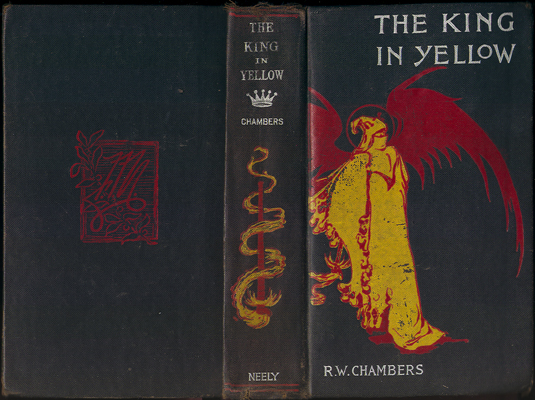
The short stories are loosely connected by an enigmatic and forbidden 2 act play in book-form called “The King in Yellow”. Characters in the short stories have read “The King in Yellow”, and it is said that whomever reads the play in full goes mad from the forbidden knowledge within the second act.
Characters also reference encounters with a malevolent entity known as the King in Yellow, identified by its tattered yellow robes and indescribable inhuman appearance, as well as an eerie symbol called the Yellow Sign.
It is worth noting that not all of the stories in the collection are connected in this way. There were nine short stories and some poems, but only the first four short stories are known for its impact on the horror and Weird Fiction genres. (My own copy of this book omits the latter set of short stories altogether, and contains only the first few stories that have this macabre tone.)
The short stories which are said to belong to the Weird Fiction genre are “The Repairer of Reputations”, “The Yellow Sign”, “The Mask”, and “In The Court of the Dragon”. But while these tales can be interesting in themselves, the part that interests us now is what happens in between the stories, and what the characters say about the forbidden play.
Excerpts of the forbidden play’s first act are inserted in the interstices between the short stories, such as this one:
“Along the shore the cloud waves break,
The twin suns sink behind the lake,
The shadows lengthen
In Carcosa.

Strange is the night where black stars rise,
And strange moons circle through the skies
But stranger still is
Lost Carcosa.

Songs that the Hyades shall sing,
Where flap the tatters of the King,
Must die unheard in
Dim Carcosa.

Song of my soul, my voice is dead;
Die thou, unsung, as tears unshed
Shall dry and die in
Lost Carcosa.”

Cassilda’s Song in “The King in Yellow,” Act I, Scene 2.
The short story “The Mask” is prefaced by this dialogue:
Camilla: You, sir, should unmask.
Stranger: Indeed?
Cassilda: Indeed it’s time. We all have laid aside disguise but you.
Stranger: I wear no mask.
Camilla: (Terrified, aside to Cassilda.) No mask? No mask!

"The King in Yellow", Act I, Scene 2.
Immediately, we see intertextual references to Bierce’s work. Carcosa, the ancient ruined city, is described in further detail as having impossible cosmic features, with black stars and strange moons. The following stanza anthropomorphises the Hyades, and makes reference to a King in tatters. There is no explicit connection between the King in Yellow and The Stranger in the dialogue, but they are implied to be the same figure.
It should be noted that Chambers seemed to just really like the names and the premise of Carcosa in Bierce’s works, and decided to use them in his writing. There is nothing to indicate Chambers knew anything more in-depth about the names from Bierce.
The references, however, create the effect that Chambers’ characters are located within the same mythos as “An Inhabitant Of Carcosa” and retroactively provides the text with a newer mystique. A tale about a dead wanderer through a lost city are connected through time with new details of a powerful malevolent entity in a pallid mask. The King in Yellow (specifically the name ‘Hastur’) is not explicitly mentioned in the original Bierce text except as a name borrowed from another Bierce work, “Haïta the Shepherd”. Other than that, there are hardly any more details about the figure known as the King In Yellow beyond this, but characters continually make reference to it in relation to Carcosa.
In “The Repairer of Reputations”, Hildred Castaigne says this:
"...This is the thing that troubles me, for I cannot forget Carcosa where black stars hang in the heavens; where the shadows of men’s thoughts lengthen in the afternoon, when the twin suns sink into the lake of Hali; and my mind will bear for ever the memory of the Pallid Mask. I pray God will curse the writer, as the writer has cursed the world with this beautiful, stupendous creation, terrible in its simplicity, irresistible in its truth—a world which now trembles before the King in Yellow..."
And our final example, “The Mask” also contains this in one of its chapters:
"...I thought, too, of the King in Yellow wrapped in the fantastic colours of his tattered mantle, and that bitter cry of Cassilda, “Not upon us, oh King, not upon us!” Feverishly I struggled to put it from me, but I saw the lake of Hali, thin and blank, without a ripple or wind to stir it, and I saw the towers of Carcosa behind the moon. Aldebaran, the Hyades, Alar, Hastur, glided through the cloud-rifts which fluttered and flapped as they passed like the scolloped tatters of the King in Yellow..."
Characters make reference to the King in Yellow and the geography of the lost city of Carcosa in the same breath. I mentioned the anthropomorphisation of the Hyades before (both a star cluster and mythological rain-bringers) partly because the nature of the King in Yellow is deliberately obscure. Even though there are descriptions of tattered yellow robes and a pallid mask, nobody knows exactly what the King in Yellow is or how it is affecting the characters. In some of the short stories, even characters who have never read the play are affected by the King in Yellow.
Knowledge of the King in Yellow seems to invade and spread from person to person like an illness, inducing a near-consistent form of madness.
A personal theory I once advanced is that this intertextual relationship reshapes the King in Yellow as a mixed anthropomorphisation of Carcosa. In other words, the King in Yellow is synonymous with the lost city of Carcosa and the forbidden play (in the same way that you can have deities who are linked to certain locations, rivers, or mountains). Knowing (or being infected with the knowledge) about the city of Carcosa is the same as knowing about the King in Yellow. Hastur, Hali, and Alar are named as geographical locations along with Carcosa, and are included in this equation to the King in Yellow.
The King in Yellow is therefore both ‘inside’ and ‘outside’ of the characters, occupying a mythical atmospheric geographical location but also manifesting as a mental state in individuals. Neatly, this obscure transgressive ontology allows for the comforting idea that neither tangibly exist; they could all be dismissed as a common, collectively contributed delusion in the mentally ill characters’ heads.
In 1927, Howard Phillips Lovecraft read Chambers’ work and became a lifelong admirer. He would go on to help further the mystique of the ancient lost Carcosa and the King in Yellow by including them in his Mythos.
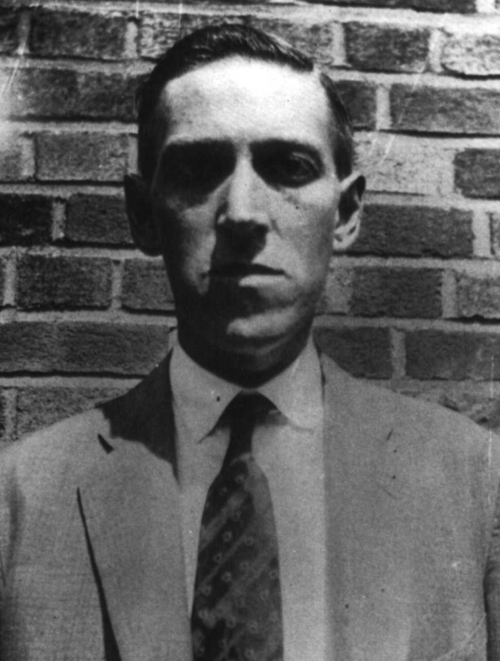
In “The Whisperer in Darkness“, one character mentions the name Hastur and the Lake of Hali, implying knowledge of the King in Yellow and their shared existence in the wider, now more influential Lovecraftian Mythos. The narrative itself has very little to do with the King in Yellow; it was merely a mention.
But its presence in the mythos gave the preceding two works a new effect: if you were reading Lovecraft’s stories and happened to search for more information about the name Hastur, the search inevitably leads you down a rabbit hole where one story references another older one. Searches for stories which, intriguingly, were said to induce madness and later end abruptly with no explanation as to what the King in Yellow actually is. And for Bierce and Chambers, the inclusion honours their shared creation in the pantheon of similar Lovecraftian elder gods.
Unlike Lovecraft’s creations such as Cthulhu and Nyarlathotep, however, Hastur/the King in Yellow has some historical provenance in Bierce and Chambers and appears ancient and more real compared to other entities in the same mythos. It gives the illusion that it is somehow alive, invading new ideas quietly, worming through into the present.
This is a neat (if a bit eerie) tidbit for those who know the story, either by reading through Lovecraft’s work or by simply being online enough to have seen other authors reference them.
Newer interpretations such as Season 1 of ‘True Detective‘ (a personal favourite) make the mystery of The King in Yellow a part of its narrative, following the tradition of being in conversation about an eldritch figure associated with a ruined geographical location.
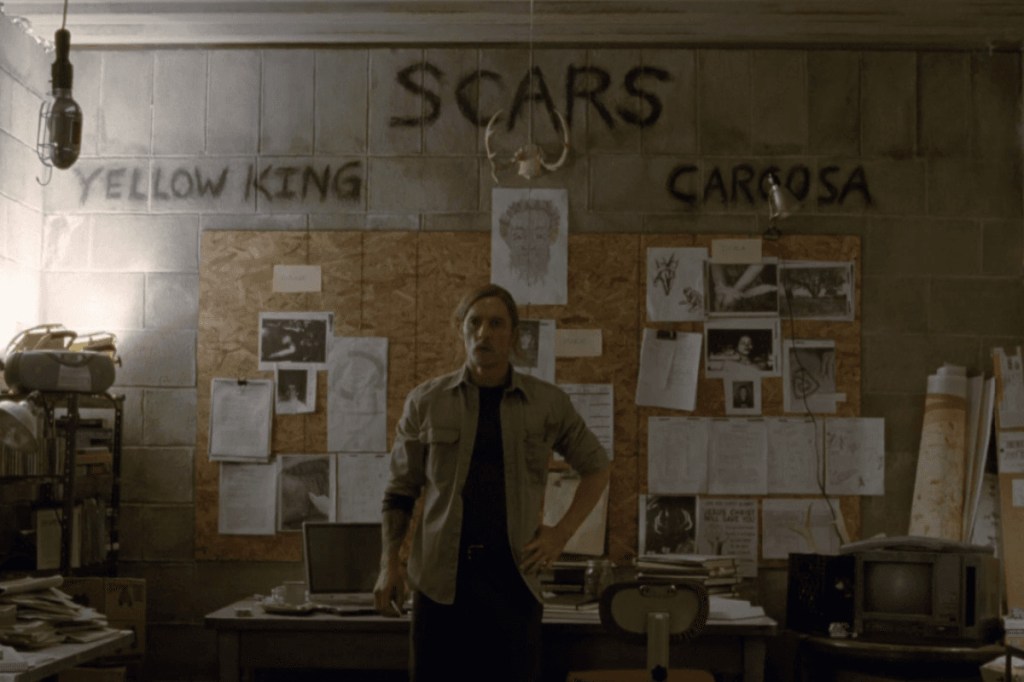
Images of Southern state ecological horror, sexual depravity, philosophical pessimism, moral decay, socioeconomic class determinism, and madness in the TV show play into a mythos where associations with Carcosa and The King in Yellow are linked with the degradation and ruin of the person and their surroundings.
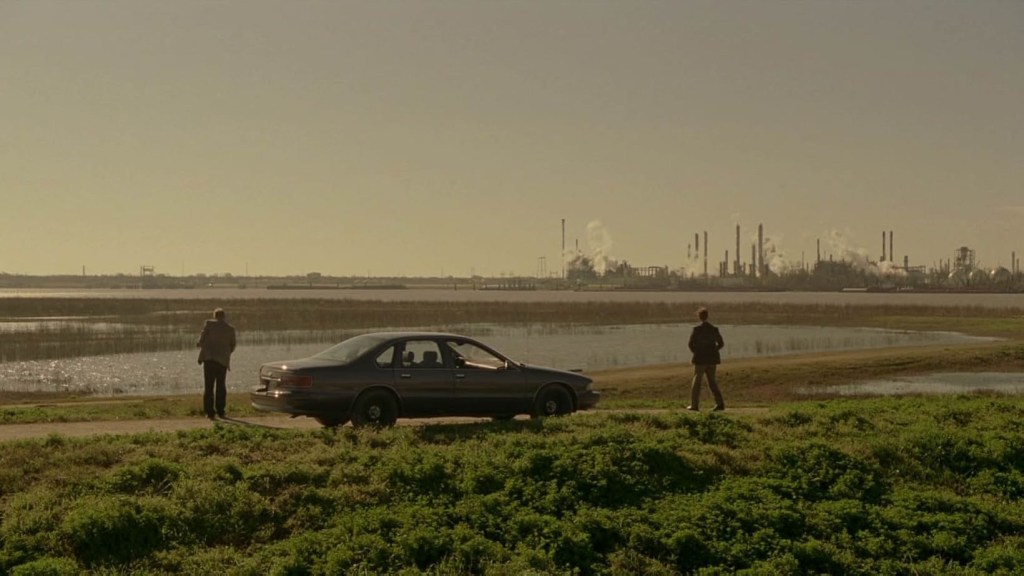
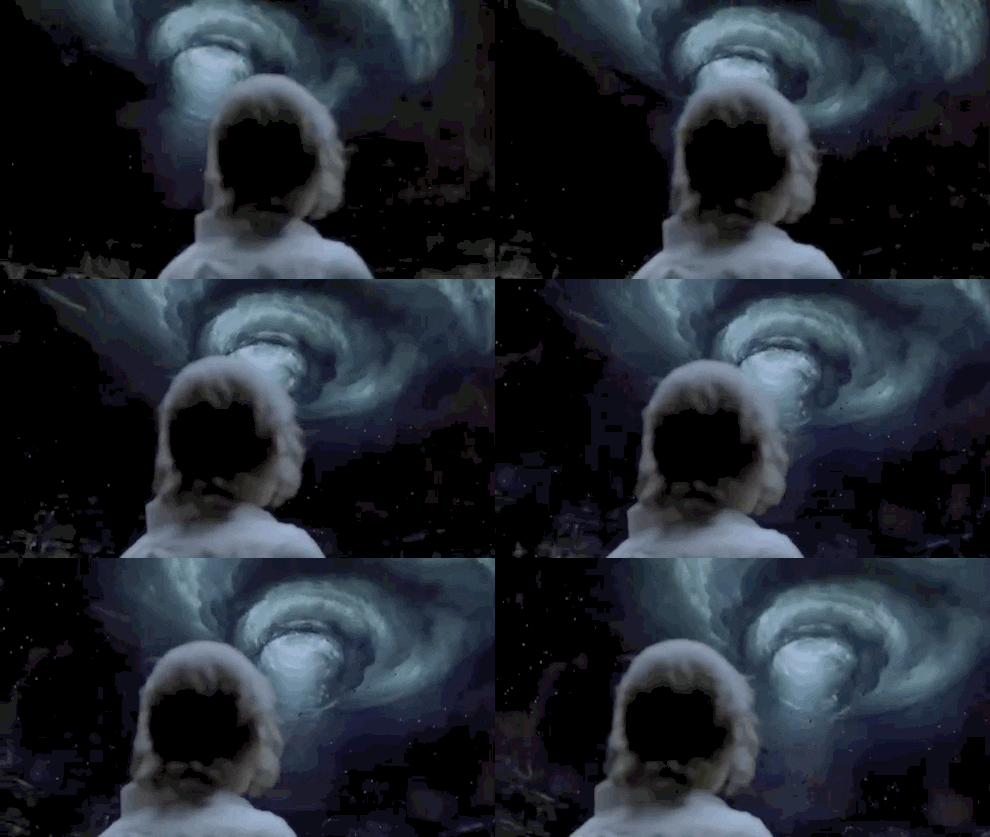
Ms. Dolores: You know Carcosa?
Det. Cohle: What is it?
Ms. Dolores: Him who eats time... Him robes is a wind of invisible voices... Rejoice, Death is not the End. Rejoice, Death is not the End.

HBO's "True Detective" Season 1, Episode 7
Beyond that, those in the know regarding the mythos have rendered The King in Yellow, Carcosa, and The Yellow Sign in various artistic ways, nodding along to the same time-stretched conversation about the same unknowable malevolent entity.
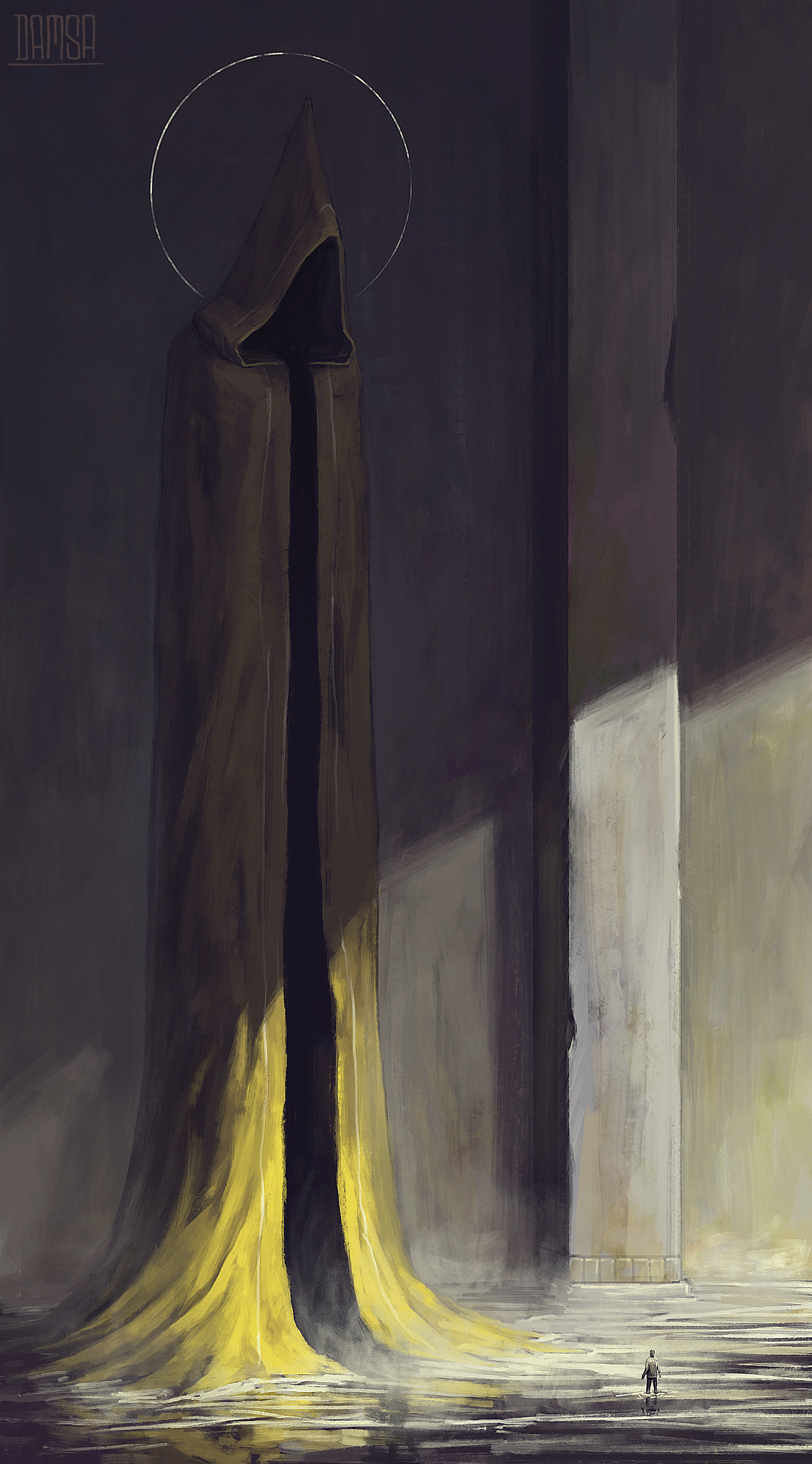
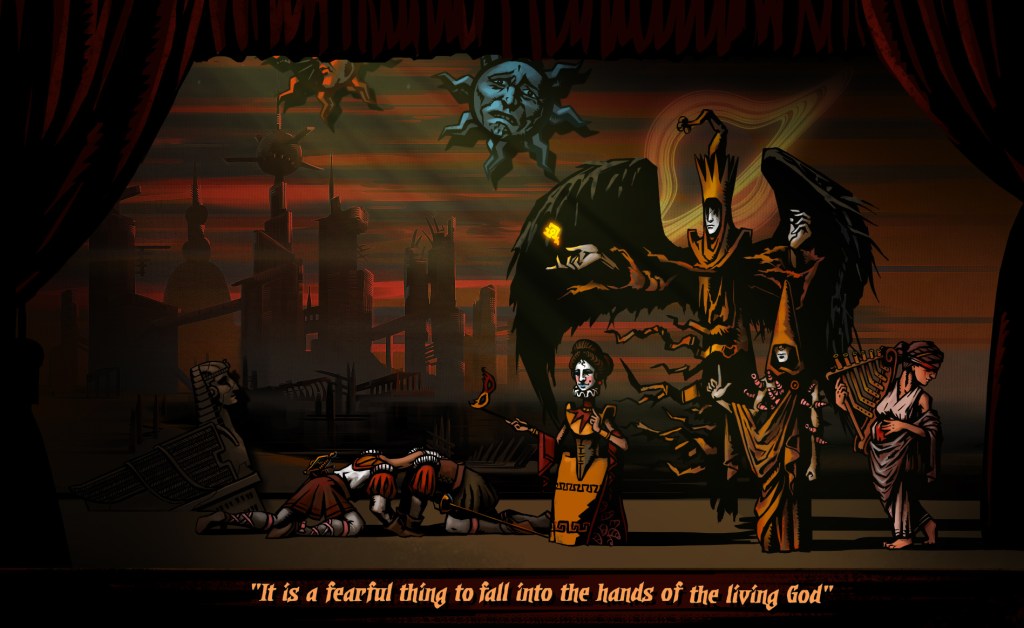
Art by Unknown, link to Source
This is Weird Fiction, and what Weird Fiction tries to be.
But this story is not over.
Malaysia has a complicated history, with socioeconomic repercussions that linger like scars across the face of Malaysia’s kindest smile. Much of these come from the long history of foreign imperialism and colonialism across South-East Asia. But the most enduring of these effects in Malaysia is none other than those of British colonialism.
The British Empire established a presence on Malayan soil in the 18th century, taking control of Penang, Melaka, Singapore, and the Island of Labuan in efforts to exploit the flow of commerce through the nearby straits. British influence expanded throughout the 19th century and came to undermine the sovereignty of the Malay States through a system of Residents: British men were appointed to these states and “advised” the local governments according to British orders.
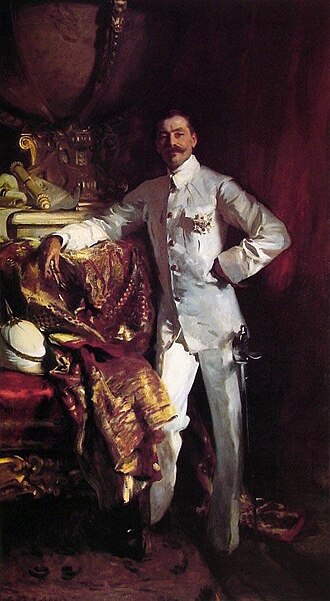
Frank Swettenham (Painting by J.S. Sargent) was the Resident-General of the Federated Malay States. And in the 1890s, A.B. Hubback designed the two-part manor that would come to be Swettenham’s colonial residence in Malaya.
Swettenham chose the name for his new home: “Carcosa Seri Negara“.
‘And where is this home?’, you might ask: Right in the capital city of Kuala Lumpur.
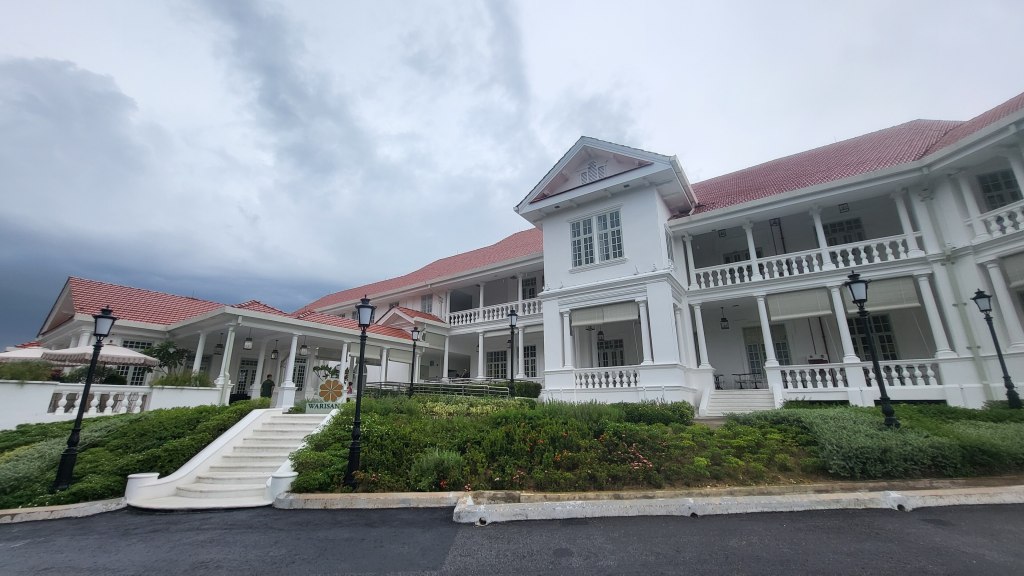
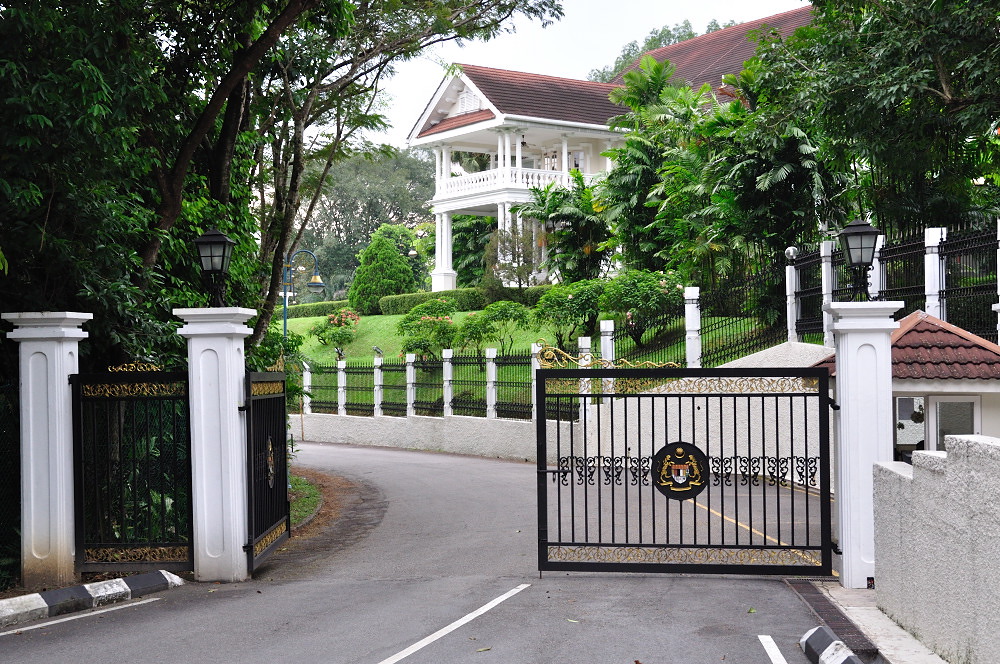
Images: Carcosa Seri Negara by Renek78, CC0, via Wikimedia Commons
In a letter1, Swettenham explains that the name is a composite of two parts of his residence. The main manor named ‘Carcosa’ (completed in 1898) and ‘Seri Negara’ (completed in in 1917). He chose the name after having read Chambers’s “The King in Yellow”, believing the name Carcosa to be an exotic combination of the Italian words ‘Cara Casa’ (desirable dwelling). This is combined with the Malay ‘Seri Negara’, meaning ‘Beautiful Country’.
How it is Swettenham came to the conclusion that Carcosa alludes to a lovely place despite its accompanying images of madness, death, and ruin is anybody’s guess. (In his letter, Swettenham speculates on the name and thinks that Chambers made it up; we can assume he did not know that Chambers had plucked it from “An Inhabitant of Carcosa”.)
Perhaps Swettenham was hooked onto the latter set of short stories which were included in Chambers’ original collection. Other than the horror of the first four tales, the latter stories took on more romantic tones that seemed comparatively incoherent with the former set. Perhaps the fictional Carcosa in his mind was more akin to a memento mori of long-lost pastoral vistas.
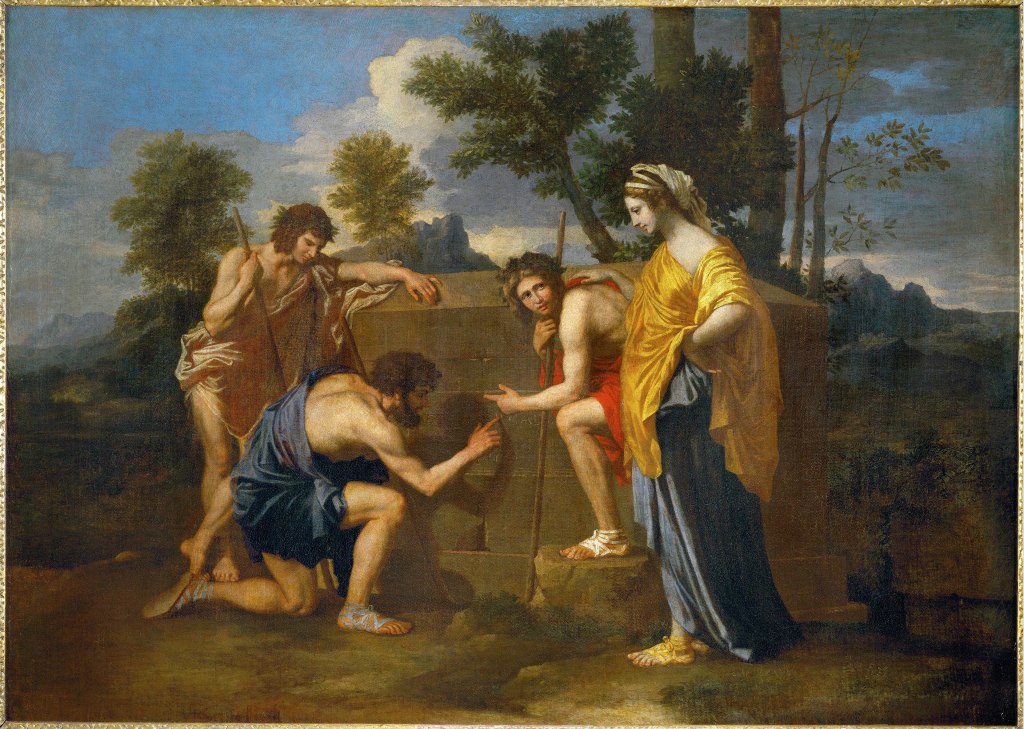
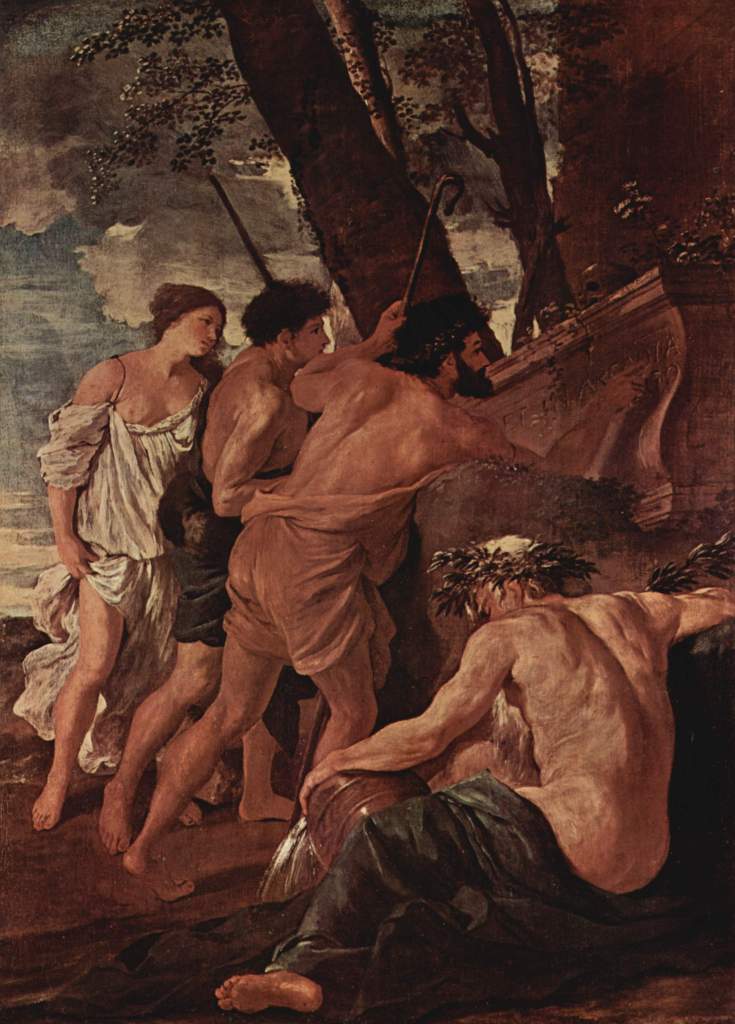
Images: “Et in Arcadia ego”2 by Nicolas Poussin via Wikimedia Commons
Note that Swettenham had included two verses of Cassilda’s dreary song in his letter, and made a connection of ‘Lost Carcosa’ to how the building lost its original name. This indicates that he at least knew of its dark imagery.
Regardless of what Swettenham was thinking, it bears repeating that he was a part of the British colonial order. One of many fingers on the empire’s dark hand stretching across the globe. Malaya (later in 1963, Malaysia) suffered under this colonial rule, and continues to suffer its after-effects into the modern day.
Therefore it’s perhaps a malign coincidence that a representative of a malevolent imperial force would name his colonial residence after a ruined city associated with another malevolent force said to cause madness and degradation (and happily doing so while believing the sourced name to be a pleasant one.) Even if we were to forget the idea that Carcosa and the King in Yellow are synonymous, Carcosa in Chambers’ book is a dark impossible place that somehow exists in defiance of known natural law, in the fevered delusions of characters driven insane.
Carcosa exists. It exists here, of all the places in the world, even though it was never meant to exist anywhere. Built for the benefit of an invasive administration that ruined lives, crushed resistances, and whose influence continues to worm its way into the modern day even after it was believed to be gone.
Today, Carcosa Seri Negara is a heritage site. Refurbished in the past decade as a hotel and now a museum with a cafe and gallery, Carcosa Seri Negara was the staging site for a number of significant events in Malaysia’s founding history shortly after World War II. The Constitution of Malaya3 was drafted there. It was seen in the film “Crazy Rich Asians”, and it has hosted dozens of important people and events within its walls.
Even today, people can drive up to Carcosa Seri Negara and see the pre- and post-colonial history steeped in the walls and the elaborate design of the two manors. By all accounts, it’s a nice enough place. People like it that it’s hard to believe there is anything sinister4 about it.
In fact, it’s nice enough to remind you of the banal reality of the world and that these are stories.
“After all, it’s just a building/book right?”
Keeping in mind what we’ve learnt about Carcosa Seri Negara, let’s go back to the question of the King in Yellow’s nature to try and understand its significance in a contemporary context. What is “The King in Yellow”?
While it didn’t start off as an eldritch figure, its imagery has always been tied to a physical location and the concept of Haunting. A tale about something that should not/no longer exist somehow existing and carrying on in both a physical and psychological sense. Chambers’ contribution to the canon is a subtler but nonetheless more malicious form of this haunting, taking on an active role in the degradation of a character’s psyche. At the same time, it latches on to the imagery of impossible geographical locations.
If we add on the slightly more grounded perspective of works like True Detective, the King in Yellow is tied to locations of decaying material conditions that it’s not unreasonable to connect the King in Yellow and its associations with the concept of Decay itself. Decay in the banal material sense, decay in the upsetting psychological sense. Whether or not the King in Yellow causes this decay, or if it appears in places where decay is occurring is irrelevant: It is there, and it spreads. Quietly.
It is the equivalent of an early creepypasta. A meme of something that seems more real than we’d like it to be.
It can be fun to believe that, in certain mythologies, deities can die off when their link to the material world/human psyche is severed; when devotees no longer worship and when their places of power are destroyed. The King in Yellow, on the other hand, invades and latches on like a parasite in the underbelly of normality. At one point, it existed in the fevered imaginations of writers and then it found its way into material reality through a most fitting method: colonialism.
But this is what helps make Weird Fiction what it is: Explorations of ideas and facts with tales so odd and unconventional, they appear to defy and transgress the confines of imagination, fiction, and reality itself.
The King in Yellow and Carcosa somehow continue to exist in more ways than one. Despite everything.
And so do we.
Thanks for reading.
– Ptolemy
Notes:
- Yes, I know using Wikipedia as a source is poor form. The letter Swettenham wrote to the editor of the ‘British Malaya‘ magazine can be found in the article about the manor, but its original source led me to a now-unaccessible archive. The other option is to find a physical copy of the original letter in a library, which I can’t do from my specific state because they have none. Other websites quote the contents of the letter verbatim, so unless I can find an archived copy of the letter to prove otherwise, we can presume the letter presented on Wikipedia to be accurate. ↩︎
- Both paintings show shepherds at a tomb. “Et in Arcadia Ego” translates into something to the effect of “Even in Arcadia, I am there”, Arcadia being a place of idyllic nature and harmony in central Greece. The general interpretation is that the speaker of these words refers to Death: “Even in nature’s paradise, death is here”. I don’t think this is what Swettenham thought, but it keeps with the theme of decay and ruin. The only wrinkle is the idea that Carcosa was nice to begin with, Carcosa had always been in ruins. ↩︎
- I hold as much respect for the Federal Constitution as any Malaysian can have for it. But the knowledge that in 1947 the multiracial PUTERA-AMCJA coalition convened to submit ‘The People’s Constitutional Proposals for Malaya’ gives me pause, as the people had proposed ideas and articles that could be considered more progressive and inclusive than certain articles contained within the existing Constitution today. The things that could have been… (link to PDF). ↩︎
- Previous links to websites about Carcosa Seri Negara also mention sightings of a woman’s ghost on the grounds. While an earlier section of this blog features a story about a dead person, I personally think Ghosts are a tired cliché because of how often it appears in local folklore. Ask any Malaysian, chances are really good that they think they’ve seen a ghost. Their existence notwithstanding, I personally think the concept of Haunting is more interesting than some translucent displaced consciousness; the latter is not actually necessary for the former, because you don’t need to be a literal ghost to haunt something. ↩︎
 Ptolemy Is Writing Again...

.jpg&oldid=979775890)
Leave a comment